
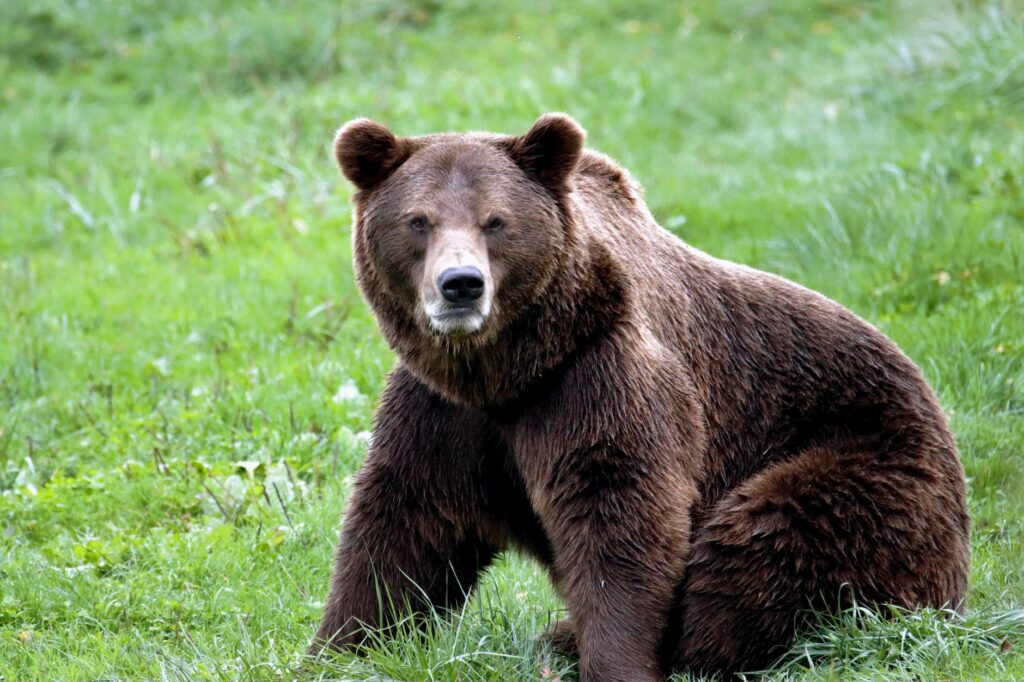
Perhaps, like me, you will not likely ever find yourself meeting up with a grizzly bear. I intentionally avoid places where bears might live. Not only grizzlies, but black bears and polar bears. There’s nowhere I need to hike so badly that I’d take a chance on meeting up with a bear. I have a treadmill, thank you.
A couple of weeks ago there was a tragic incident in Bella Coola, BC, where a 48-year-old mom and her 20-year-old daughter were killed by a grizzly and her three cubs. The women were hiking about a five-minute drive from their house when the attack happened. They knew the trail and it wasn’t remote. Investigators had the bears’ DNA and once the animals were found, they were “dispatched.” There is no chance for rehab or relocation once they’ve attacked humans.
Even though a bear attack probably isn’t in my future, I felt so terrible for these two experienced hikers that I wondered whether there was anything a person could do in this situation. (Not to suggest what they did or didn’t do made a difference. I simply had no idea what one should do when there’s a bear.) Different bears call for different reactions. Do you climb a tree? Make yourself as big as you can and yell? Run? I wanted to know.
It Depends on the Bear
It turns out, according to wildlife experts I consulted, that you have to determine the reason a grizzly bear is coming for you before you decide how to behave.
Not to make light of the situation but my first thought was, I’m supposed to interview the bear?! But a bear that’s coming for you because you look tasty behaves differently from one that thinks you’re trying to steal or harm its cub.
If you’ve stumbled upon a den or a cub is on the scene, you’re perceived as a threat. Yelling and acting aggressive will only prove you’re dangerous. Instead, back away slowly, don’t make direct eye contact, and if you’re with others, do it in a group, together. No screaming, tree climbing, or running. Just let the bear decide you’re not a problem and make sure it has a clear escape route. If it gets close enough, use your bear spray. You ARE carrying bear spray? Once it’s gone, don’t get overconfident because they sometimes come back. Get the hell out of there.
Now, if the bear is aggressively coming for you, that’s when you play dead. Drop to the ground and lay face down. Spread your legs so the bear can’t flip you easily. Cover the back of your neck with laced hands. Bears only like living food. When it leaves, don’t be in a rush to get up. Bears have been known to retreat and watch to see whether the person is really dead. I am not kidding.
What do you do if its motivation is uncertain? Experts say that you’re better off to start with playing dead and pivot if you need to. If the bear begins to bat you around or bite, get up and throw things and spray it. Aim for the snout. This change in response sounds absolutely terrifying considering the bear is so close. But the alternative is much worse. I’m sure that any of us would do what we have to, to stay alive.
What if it’s Not a Grizzly?
For any other bear, you fight back. Spray, throw rocks, insult its mother, do whatever you can. Playing dead for a polar bear or black bear would be like serving yourself on a platter. Only grizzlies have the nuance of approaching you for different reasons. Bears are omnivores. They love plants but they also love meat.
There are other ways to help prevent a bear encounter. The larger the group, the less likely a bear will approach. Same if there’s a dog in the pack, but only if its on a leash. Statistics show that an unleashed dog will sense the bear, run to it, and then lead the bear directly back to you. That’s a catastrophe.
Perhaps the most important advice of all is to not only carry bear spray but make sure it’s accessible. If it’s buried in a backpack it won’t do much good. Hikers shouldn’t get complacent. Carry that canister on a belt or somewhere where it can be grabbed in an instant. Sometimes, that’s all the time you have.
There has been at least one bear attack in BC annually for the past several years. Some 13,000 grizzlies live in the province but human-grizzly encounters are still quite rare. That brings no comfort to the family of these two women who loved the outdoors and especially, enjoying it with each other. We have no idea how the bear encounter happened or how the women responded and it really doesn’t matter. My heart breaks for them.