
Recently on this page I wrote that I love a quitter. Well, I became one of them this week and I’ll tell you why.
I’m sharing today’s adventure in voice-over work for two reasons. First, for a little peek behind the scenes. And second, to prove that even so-called veterans can find themselves in quicksand.
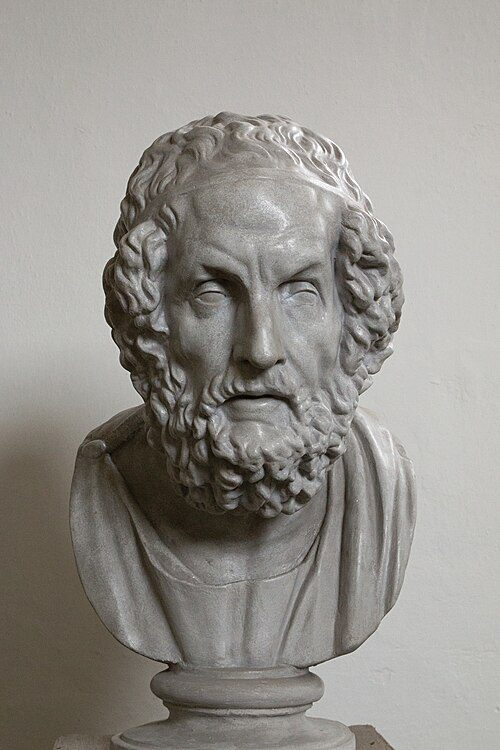
I accepted a job to narrate several audiobooks. I’m always grateful for work and this gig is no exception, so don’t mistake my explaining for complaining. The task was to give voice to older works that no longer fall under copyright laws. Anything published before 1923 (with some exceptions) is now in the public domain. This includes some of the works of Mark Twain, Jane Austen, Charles Dickens, Shakespeare and others. Unfortunately, my assignment (after I’d accepted the contract) was The Iliad and The Odyssey by Homer. I wish it was Homer Simpson. But no, it was Homer the Greek poet who lived in the eighth century.
His works are considered masterpieces. They’re hugely influential and still widely read. Reading them silently to yourself is one thing, though. Listening to them in an audiobook format is quite another. Here is just one small example of a paragraph from The Iliad, Book II.

This entire chapter is mainly composed of lists of warriors and the towns where his soldiers are from. There are countless men from myriad towns and cities in Greece and other lands. It goes on paragraph after paragraph. And it continues for about 500 pages, off and on. There isn’t as much regular writing as there is this kind of stuff. And no, most of those words (except Aetolians) aren’t pronounced the way you guess they are.
It’s in the Way You Say It
When you’re reading along in your head, you can pronounce names any way you wish. When you’re narrating, you need to get them right. In this case they were literally all Greek to me. Usually, the narrator is provided pronunciation guides for unfamiliar words. That was not the case. I spent as much, and maybe more time, looking them up than I did actually saying them.
I have more than a dozen pages with lists of alphabetized Greek names. I hope to find a use for them once I’m done. (Anybody else narrating Homer?!?)
It’s just a rumour that I ended up sitting on my husband’s studio floor, hugging my knees, in tears. Each book was approximately 19 finished hours of audio. In almost a week, I’d completed a couple of hours. It was painfully slow and the least fun I’ve ever had in VO.
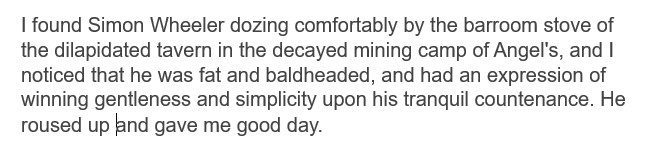
We narrators were apparently assigned our books at random. While I was learning Greek, someone else was sailing through Twain’s folksy style, like this. Not an unfamiliar word to be found:
A highlight of narrating audiobooks is getting to read great books as part of the job. A few chapters of Homer is enough to last me a lifetime. I quit the job and refunded the client their money. It was a lesson learned and quite humbling at this stage, to be honest. But the relief – oh the relief of freeing myself from the clutches of 8th century prose!
Wow! My then boyfriend, now husband is of Polish descent. I could spell his name long before I could say it properly. lol I can only imagine the work you put in to pronounce Greek names. Hope Cuddles (& Derek) gave you some consoling cuddles. Have you ordered any Greek meals since you started this venture?
I think I’ll be off Feta for a while! 🙂
Good for you for choosing yourself and walking away before things pulled you down even further. I’ve always believed in never quitting, but this fall—when I started working at a new place—I learned that protecting my health matters more than any job.
I get that, Jennifer. My parents’ generation was told to hang in there no matter what, show how tough you are. It’s not their fault that they passed that on but there were times I should have said “stuff it” instead of risking my health. We have both learned – eventually!
Some materials should never be translated from print to audio for even the best translation you will still lose much of the context and meaning which comes from seeing it in print.
Your sample gives me the impression that it is written more like a historical text, and there hard to listen to.
You are correct, Allan. It wouldn’t be an enjoyable experience to listen to it, no matter how professionally it’s done. It’s just awful. Sorry, Homer.
I am a big advocate of removing yourself from an intolerable situation! Good for you!
It took me a couple of days to work up to it! Thanks, Dan.
I’m reading a book right now where one of the main character’s name is Oliviere. I’m about two hundred pages in, and I constantly find myself stumbling on the pronunciation of his name. Oh-livi-air, Oliv-iair – O-liv-i-aye. I just started calling him Oliver to save my sanity. I can’t even imagine what you were feeling when you saw all those Greek names.
You absolutely made the right decision, Lisa.
Thanks Claire. That’s funny!