
Just before the holidays, it happened again. I’m supposed to know better but I still got caught by a fake social media post.
Between satire, opinion, AI, ads, and the real thing, it’s a daily battle to figure out what’s real. And that’s only if you care enough to find out.
The more Facebook gets to know you, the more it sends you stuff close to what you’ve previously liked. Pretty soon you’re in a world of your own making and you don’t even know it. There’s a wide spectrum of information you’ll never even see because it doesn’t fit the app’s idea of “you.”
Often, when I suggest confirming whether the source of a story is real, I get a blank stare back. We used to rely on our gut reactions and sound judgment when we saw or read information. Those days are gone and it’s difficult for many people to accept. It’s no wonder that misinformation spreads like a virus.
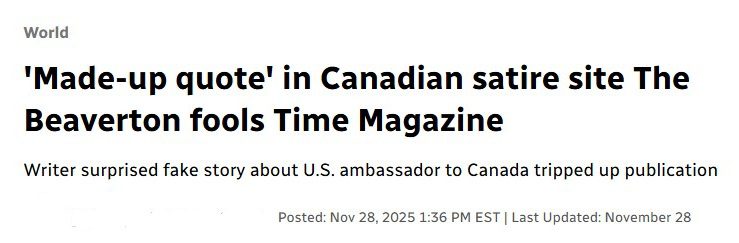
This isn’t to shame anyone, least of all me! It happens to all of us. Every once in a while, even a legendary publication gets caught.
I’m trained as a journalist. Confirming what I see is part of my nature. Many people think they’re not consuming false information if it falls in line with their biases. If we care about truth, stories we agree with are often the ones we need to check out the most.
And That’s Where I Went Wrong
A social media post that seemed to be written by Cher was fake. It fit with what we know about Cher. She’s politically vocal and fights back when cornered. This is what appeared:
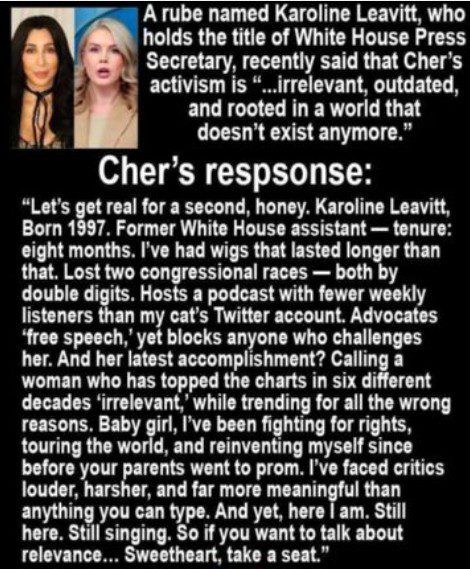
It was shared on every social media app. Famous people shared it. Leavitt’s comments were real, however they were about ALL Democrat celebrities. But Cher’s response wasn’t real. For starters, there are obvious spelling mistakes. Also, Leavitt lost only one congressional race. (And does Cher even have a cat?!) But I broke my own rule. I believed it simply because I adore Cher and can’t stand Leavitt.
Who’s the Winner?
Sometimes it’s not clear who will benefit from posting something that isn’t true. Other times it’s as plain as day.
Here’s an example: Would Kelly Clarkson or Jann Arden really promote weight loss gummies? Those ads are all fake, done by AI, and they’re meant to increase useless gummy sales. That one’s easy. Others are more difficult to figure out.
“In the past, people didn’t know things. Now, they can be confidently wrong about something and that worries me.” John Oliver to Trevor Noah, answering the question, what’s the biggest existential threat right now.
A question to ask is, what does the person behind the story get from likes and shared? Are they telling you about a “little known” vitamin deficiency and selling vitamins? Do they only stick to one point of view without wavering or are they more balanced over time? Despite what we are being told, either side of the political spectrum is not all bad. They’re also not all good. It’s up to us to put some effort into finding that out.
Tools of the Trade
The following steps are second-nature to journalists and anyone who wants to be sure about what their reading and sharing:
- Debunking. This is as simple as putting a headline plus the word “debunked” into a search engine. If the story has been proven false, that information will come up. Other unbiased sites for finding whether stories are true include Snopes, the Associated Press, and Reuters. These are all independent, neutral, reliable news sources. Snopes does nothing but research stories to determine their validity.
- Google Reverse Image Search. You can upload a photo and find out what it’s all about. Is it AI? Old? Out of context? Every time there’s an attack of some sort, idiots upload photos and video from other situations and claim they’re new. Thousands of “war” photos from Gaza and Ukraine are actually pictures from other, previous wars. These idiots are trying to stir up outrage and it often works. Here’s the link: https://images.google.com/
- Telltale signs of misinformation include phrases like: “share before it’s deleted”, “the shocking truth”, and “one simple trick.” Turn your personal bullshit detector to HIGH if you see this type of wording. It’s trying to create urgency so you’ll be compelled to click.
- Remember, your time is the currency you’re spending. The longer you’re on a social media website or watching a video, the more money you make for the owner. YouTube pays big money to those with large followings. When the product is free, the product is YOU.
In my years as a broadcast journalist, we needed to find three independent sources before we decided information was true. Anyone could call the newsroom and claim anything was happening. But unless we saw it with our own eyes, we sought proof. That’s how you maintain a reputation as a source of truth.
It’s My Thing, Maybe Not Yours
I’m aware that many people won’t really care whether something is true. Especially if it fits their world or political view. We were given access to social media without truly understanding how it operates and the extent of its power. But sharing fake posts can have real consequences. They shape opinions. Sometimes they spur people into action that’s not always good for the world.
I’m also aware that it feels like (and might be becoming) a losing battle. It concerns me that society is losing a grip on the truth, like a toddler letting go of a balloon. It used to matter and real journalists are still out there, working to find it. In fact, I won’t engage with anyone who blames “mainstream media” for spreading untruths. They’re not all one organization. Having worked in the industry most of my life, I can promise you no one got in our way. Some suck. Many don’t.
No matter how you align or whom you trust, fakery is out there to try to take advantage of you. It might not be your money, but it will take your time, and that’s the most valuable commodity of all.
When I first saw that Cher/Leavitt post, I saved it because like you, I love Cher and can’t stand Leavitt. But, I did wonder if it was true. Now I know, and I thank you for pointing out the steps we can take to verify the validity of what we read.
Having everything at our fingertips these days sure has changed the world, eh?
Remember the days when friends and family would have political debates around the dinner table on every special occasion? I wonder if any of them ever said, “grab the encyclopedia, do your research!” Nope…I very highly doubt it. Plus, there was only one set of encyclopedias out there to begin with. There was never a set written to accommodate the belief of the left, or the right. All our news came from one place, and I believe it was a most reliable place back then.
Interesting blog, Lisa. Thanks.
I agree with you Claire. Not only that, we could discuss ideaas without pledging allegiance to one party or person! Especially in the US, some people cling to their “leader” like he’s a Messiah or something. It’s darn frightening. I said the other day that I am HAPPY our PM leans a little bit right. He’s undoing some of the far-left things that his predecessor put in place and I think it’s the right move. Nuance, compromise, acceptance seem like lost concepts. The less I’m on social media, the better I feel. 🙂
Perception bias is alive and well and AI will only enhance these views with truth and fact becoming rarer day by day not because of the technology, but because were overwhelmed by its volume and were becoming numb and we already have to much on our plate to scrutinize so we unwillingly accept what sounds good.
A timely reminder!