
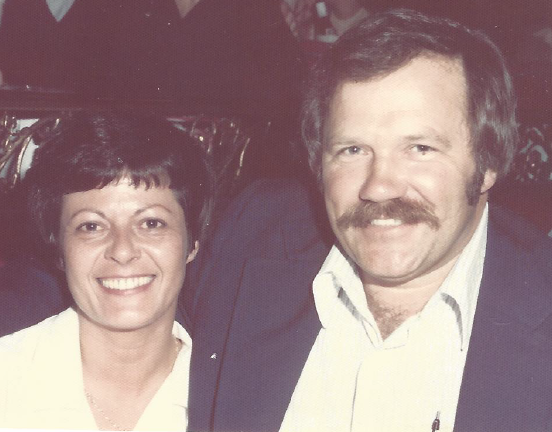
Amazingly, astonishingly, it’s been six years since my mom died. (The actual anniversary was Monday.) Next April will mark a decade since we lost dad. I’ve learned a lot about grief in that time.
Living in a world without your parents is weird. Most of us will do it, if we were fortunate enough to have our parents with us for many years. As my pod-ner Erin Davis has said, it’s not like we’re orphans at this age. (She literally wrote the book on grief.) But I think adult orphan applies because being parentless changes the order of things. Now we are at the front of the line that’s moving toward the exit. It’s the only lineup we hope moves slowly. It’s predictable and novel at the same time. And it never, ever goes away.
That’s the thing about grief. You don’t get over it. It changes you into someone new. You’ll never return to the person you were before the loss. Not entirely. I’ve always been conscious of losing people and kept the thought in my head that, “this might be the last time you see them.” Random, painful losses through my life showed me that you couldn’t take the future for granted. But it’s more than that.
A Deeply Personal Journey
It wasn’t surprising to learn that science proves grief reorganizes the brain’s attachment and reward systems. (Read more on that HERE.) The brain analyzes grief as a fundamental threat. It spikes some chemicals and reduces others. You believe you’re not thinking clearly because you’re not. The brain unlocks the memory vault and elevates it to an obsession. Over time, some of these changes can become permanent if the grief is prolonged and deep. Some people’s emotions can go numb. It truly is an individual experience.
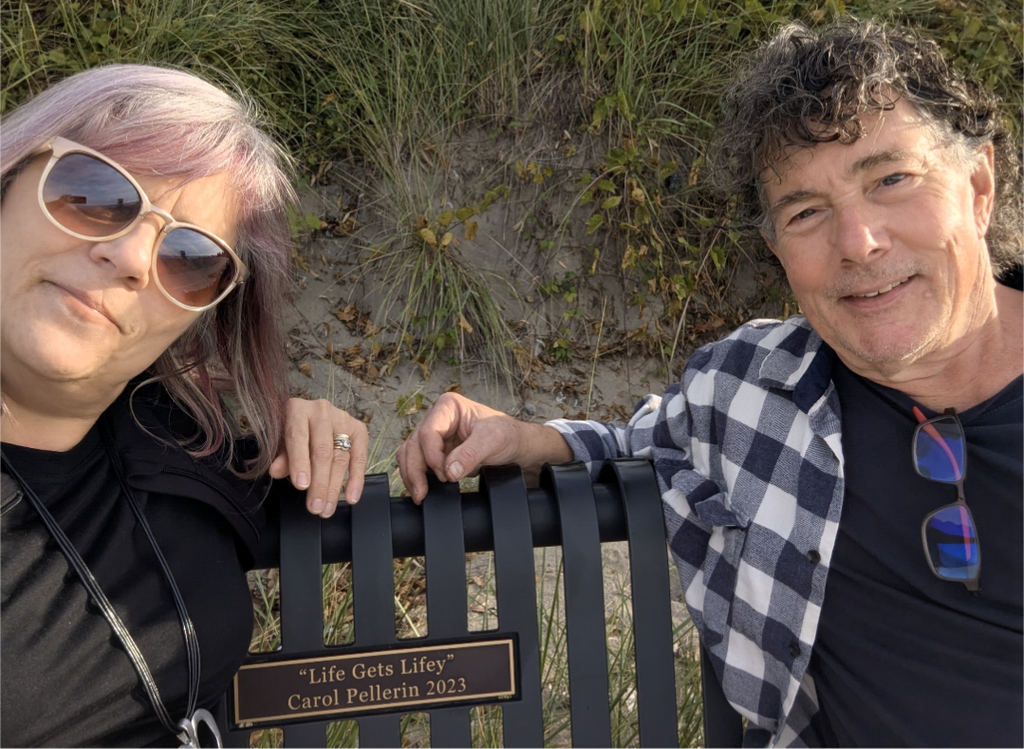
Knowing that something is coming and experiencing it are two different things. Thinking it and feeling it are worlds apart. When I’m asked for advice on dealing with grief, I always say, be kind to yourself, full stop. In my experience it will boomerang at random times, or not. It might cause a noticeable decline in energy, or not. Even when you have time, as my mom and I did to talk about anything, there will still be things you wish you’d asked or said. Or not. Every relationship is different. Every person’s grief is different, too.
We Keep Them Alive By Talking About Them
Our mother was smart and funny. She got in on the ground floor in the new, expanding world of computers but quit because she was pregnant with me. I wonder how differently her life might have turned out if she had kept that job. (They would have fired her if she hadn’t quit. Those were the times.) She swallowed her own ambitions and lived for us kids, instead. It was her choice, yes. But I know it frustrated her sometimes to be “just” a housewife (again, the times) when she had much more to contribute. She eventually became an important part of dad’s company which evolved into a family business.
Our dad dropped out of school early but he was a math whiz. He could do complex formulas in his head and he loved keeping up on world affairs. We always had subscriptions to TIME, MacLean’s, and the big newspapers. He worked his butt off for us. Although I’d describe him as a conservative, he also believed in a woman’s right to choose and other traditionally liberal viewpoints. To him, life was simple. Look after your family. Don’t screw people over. Be the kind of person that others can depend on.
At some point, it sets in that, this is how life is now. I can’t be the person I used to be because I carry grief with me, always. It’s the price of loving someone. And in the end, it’s totally worth it.