
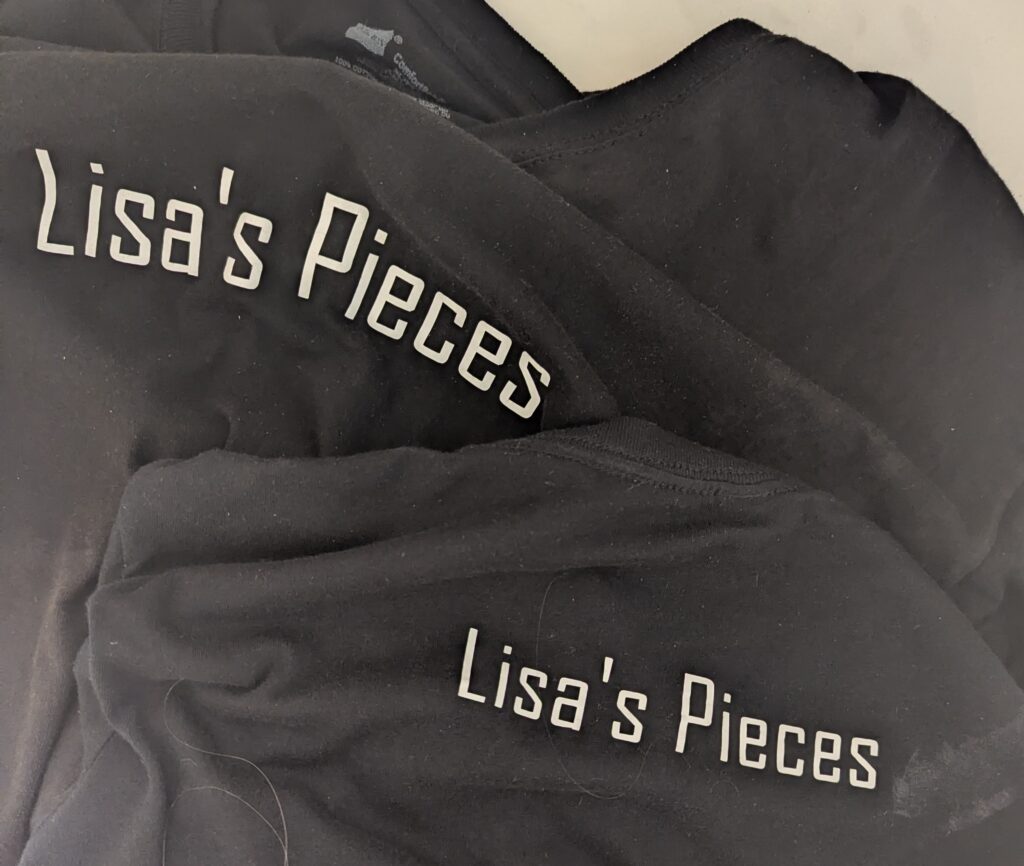
Derek and I weren’t new to the concept of gathering a bunch of different vendors and putting them in one showcase. After all, he managed the World of Motorcycles Expo in London for a decade. There were spin-off shows in Kitchener and Hamilton as well. I was alongside him for many of them. Most people were wonderful. Oh, the stories I could tell about some of the sleazy, manipulative, and hostile folks we dealt with. But he won’t let me!
Vintage markets are much smaller, outdoors, and more intimate. But, like anything, the tone is set by who’s managing it. In St. Thomas and Union, that’s Mickey of Paradise Vintage Shoppe. She not only knows her stuff, she has been-there-done-that with every possible issue. And she has the right temperament for dealing with little crises that inevitably pop up. Everyone loves to work with her.
And last weekend, the first vintage market at Port Stanley Brewing Co. was arranged and managed by Dee from Lucky Ducks Curated Finds. Again, another person with lots of knowledge and all of the right attributes. She’s a total gem.
Before Popping Tent and Setting Up Tables
Here’s are the top things we learned in our first season.
- It’s not just about sales. It’s about connecting with people, having fun conversations, and the meeting of minds. We learned some fascinating history of Sparta, ON, from a couple who used to have an antique shop there. Derek drooled over one man’s description of his massive workshop and all of the things he’s included in it. We also discussed lamps. A lot.
- Tell people what they’re looking at. You might think that an item with a lightbulb in it and a cord attached would obviously be a lamp, but they’ve been looking at all kinds of stuff. Their heads are full! So, put a little sign out that makes it clear. Tell them you’d be happy to plug it in so they can see it lit. No one’s going to mind being relieved of having to think harder in a busy market atmosphere.
- Don’t block your booth! People come by just to say hi, which is wonderful. But a wall of backs standing in a tent opening is a sure way to get curious strangers to pass you by. We spent one market standing away from our booth making it appear unattended. That worked well. One of us approached when it was obvious there was a question or request. At another, we put chairs behind the table at the very back so the entryway was still clear. Either way works as long as a) you’re close by in case you’re needed and b) you don’t stand there watching people with your arms crossed and a grimace on your face.
- If you’re creating stuff, you’ll rarely sell it for its true value. We knew that going in. If you were serious about adding the cost of your time to the material costs and everything else, you’d price yourself into oblivion. Do you want to sell stuff? Then think of it as a hobby, not a get-rich-slowly (or never!) scheme.
- Cheer for your peers. That tone was set for us early on when other vendors congratulated us when we made a sale. It’s a real community and most vendors are happy about the success of others. They see each other regularly and many are friends. (There are always a few who seem competitive but that’s quite alright too. Whatever fuels you!)
- You’re not for everyone. We were amused by those who looked at our weird and wonderful offerings as if we’d held a turd under their noses! Derek feels the same way about booths with kitchenware and linens. That’s why there’s a huge variety at these markets because we’re not for everyone. But those who get what we do, really get it.
- Watch and learn. We picked up a ton of knowledge from just watching how other vendors do things. For starters, a rolling cart is a must. (Thank you for the example, Miguette, of Railway City Vintage.) We walked back and forth to our vehicles so many times, the only happy camper was my step counter! Everything from arranging displays to pricing to – you name it – is something to learn. We also strolled as many markets as we could find to make sure our prices weren’t unreasonably high or too low. There’s a lot to figure out.
Our Conclusions
We approached the season as an experiment. We wanted to test the markets (literally!) and see whether we were a good fit. Some were and some weren’t but it was all well worth doing even when the profit margin didn’t look that way. Whether we’ll take part in outdoor markets next year is still in question. We need to rest up first! It’s a side hustle we love. I’m a thrifter, he’s a maker, and together, Lisa’s Pieces will take on a new form, hopefully before the end of this year. We’re just waiting for confirmation. Stay tuned!